Ten Books I Hope My Daughter Reads Someday
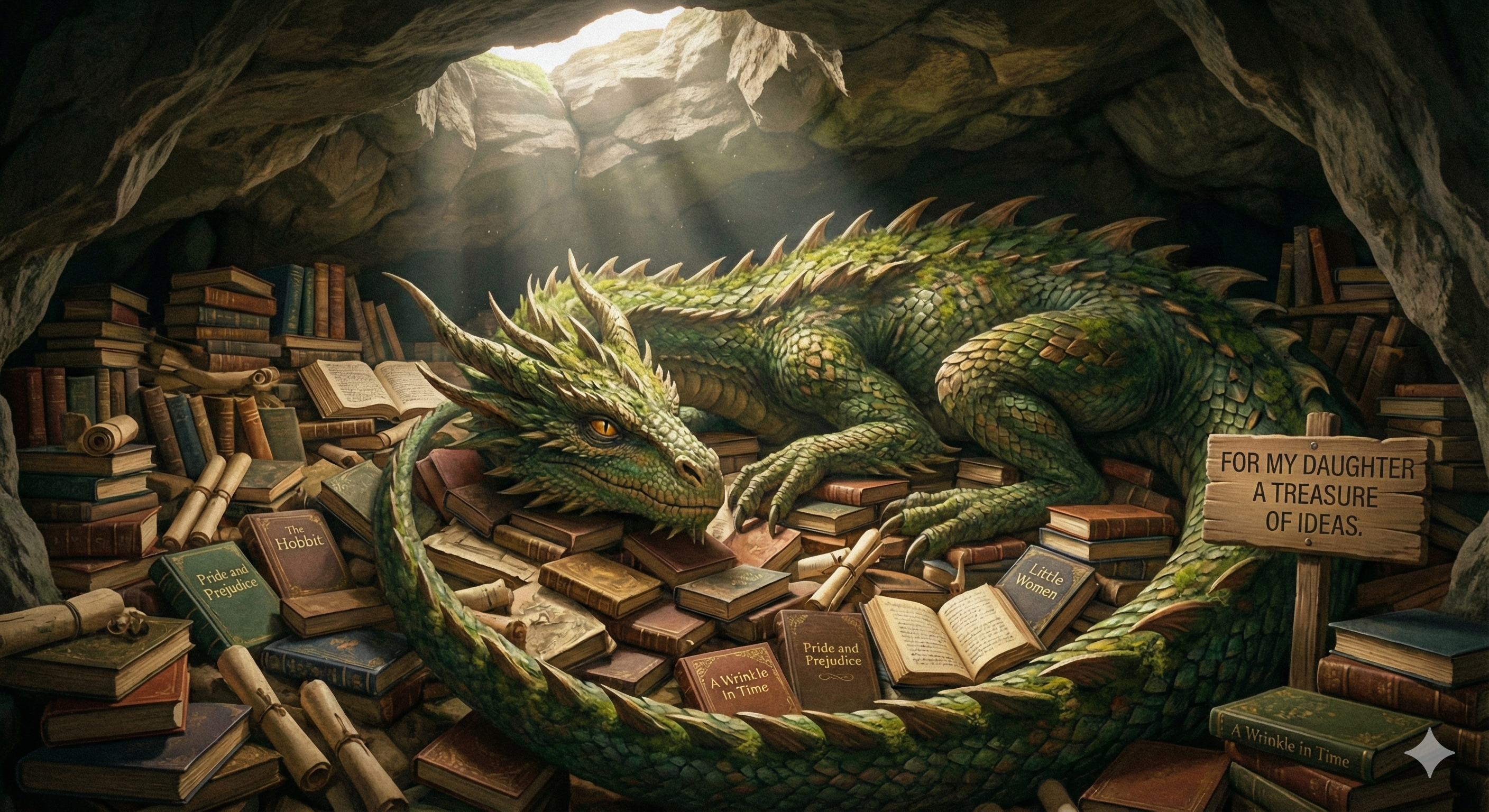
I hope my daughter reads tons and tons of books. She is a pretty big reader as a middle schooler, so I think she is well on her way. There are some books of course, that I hope that she one day reads. I decided to come up with a list of 10 that I especially hope she gets to. My guess is this is the type of list that will always be changing, based on where I am at in my life. However, for the record, here are the ten I thought of today. Please note, The Lord of the Rings is not on the list because I had the distinct pleasure of reading the whole thing to her when she was younger.
- Meditations, by Marcus Aurelius
2 to 5. Ryan Holiday’s Cardinal Virtues series
-
Eknath Easwaren’s translation of The Dhamapadda
-
The Diary of a Young Girl by Anne Frank
On William Penn
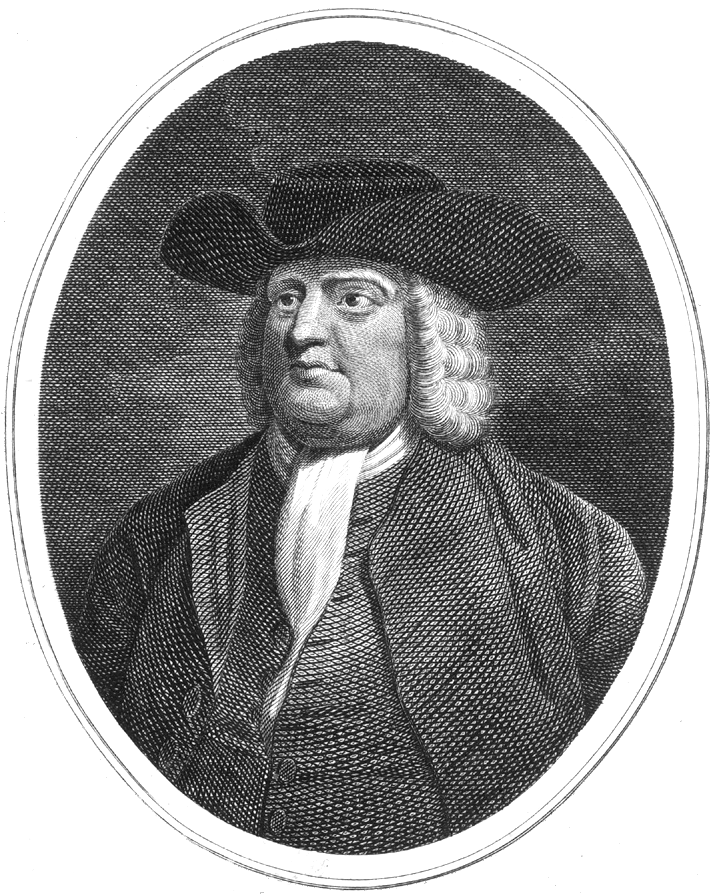
Most of us remember that Pennsylvania was founded and named after William Penn. Many will also recall that Penn was a Quaker and that the Quakers were a Protestant Christian sect that were pacifist and later played an important role in the abolitionist movement and the underground railroad. Oregonians may know that one of our local universities is named after the leading Quaker George Fox.
Penn comes up in my AP US History class when students are learning about the unique attributes of the original British colonies in America. I always talk a little about the Quakers and note that the city of Philadelphia derives its name from the Greek words for ‘dear’ or ‘loving’ and ‘brother.’ Hence, the ‘City of Brotherly Love.’ Very Penn.
I also instruct my students that Penn was relatively warm to the indigenous tribes. His general kindness backfired however, in the sense that migrants to the colonies found Pennsylvania relatively welcoming since the founder was so tolerant. The result was, after Penn’s death, the arrival of many who were not so tolerant, ultimately dooming the Native peoples to similarly frustrating sorry relative to the other parts of British North America.
However, I recently learned through my reading that Penn actually took the time to learn the language of the Lenni-Lenape (Delaware) people in order that he would be able to more fairly deal with them (he already knew five other languages, including English). Penn removed the middle man, hoping for deeper understanding and more fair dealing. I found this to be quite incredible, given what we know about the other colonists and their general greed and avarice. Indeed, Penn’s respect for the natives led to the so-called ‘long peace’ in Pennsylvania which lasted throughout his lifetime.
Where is David Rees When You Need Him?
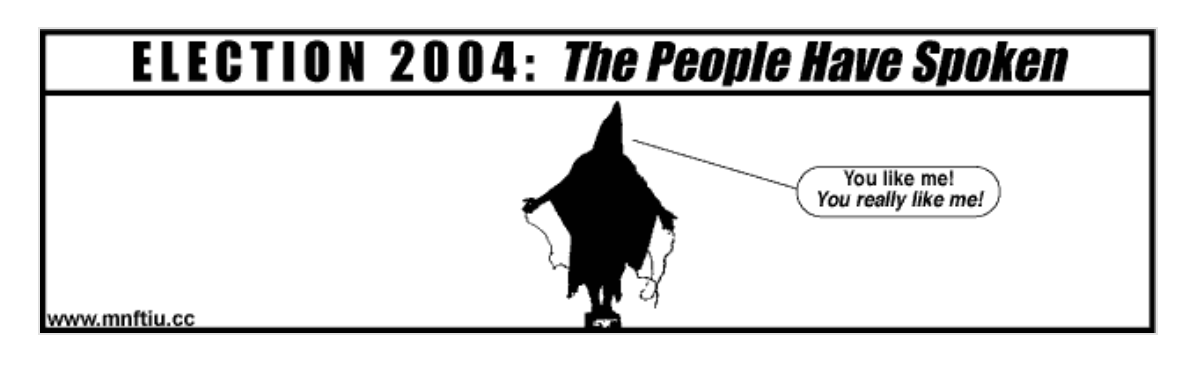
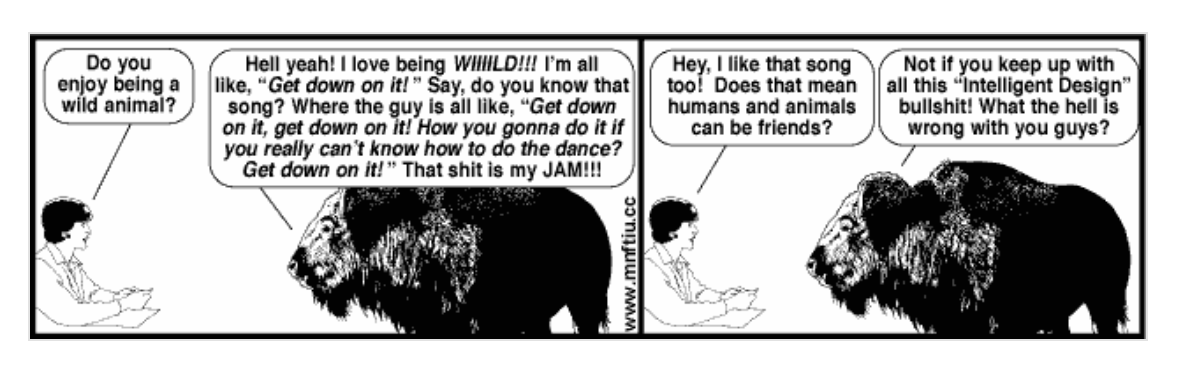
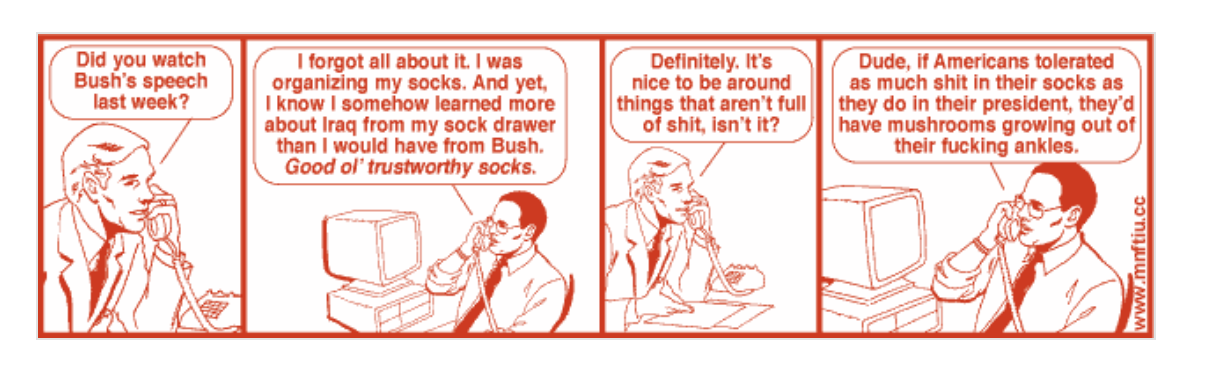
Back when George W. Bush was the president there was a cartoon published in Rolling Stone called Get Your War On. I absolutely loved it. It was created by a very clever, and funny guy named David Rees. The deeply sardonic cartoon used corny office clip art to sarcastically skewer Bush and his fundamentally stupid policies, including the ‘War on Terror.’ The cartoon ran from October 2001 to the end of Bush’s presidency in early 2009. I thought of it because as I recently finished Ben Burgis' book about Christopher Hitchens, it occurred to me how much we need the wit and wisdom of a guy like Hitch in these times. It then also occurred to me that I wish Mr. Rees was making a Trump era version of Get Your War On. Maybe he could call it Get Your Greed On? Or maybe Get Your Corruption On?
Anyway, here are few of Rees' brilliant cartoons.


My Music Streaming Highlights of 2025
I have never subscribed to Spotify. I’m fully ensconsed in Apple ecosystem, so that means I listen to music through Apple Music. That said, I am grateful that Spotify created their ‘wrapped’ feature, because Apple Music does something simlar and the QS nerd in me loves it.
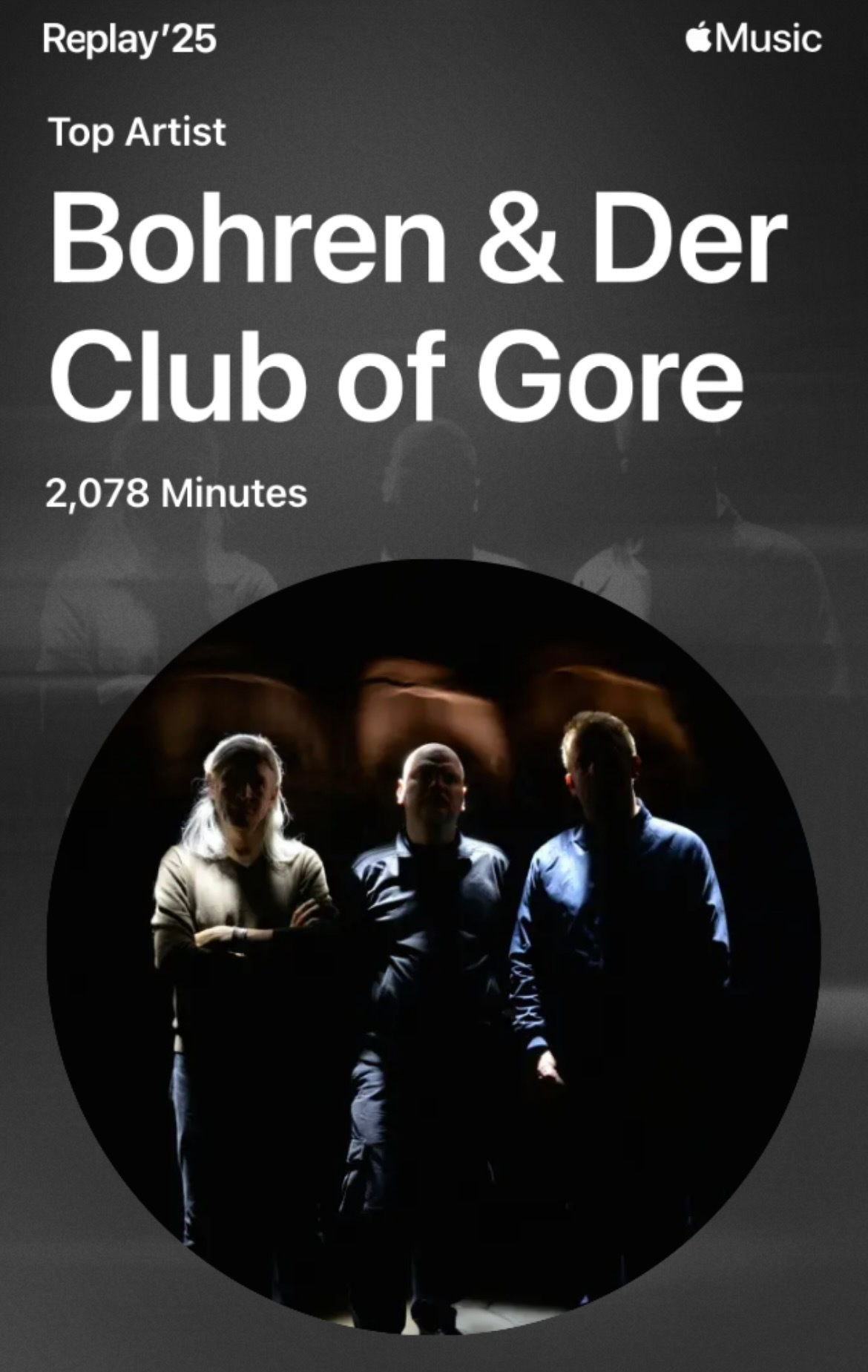
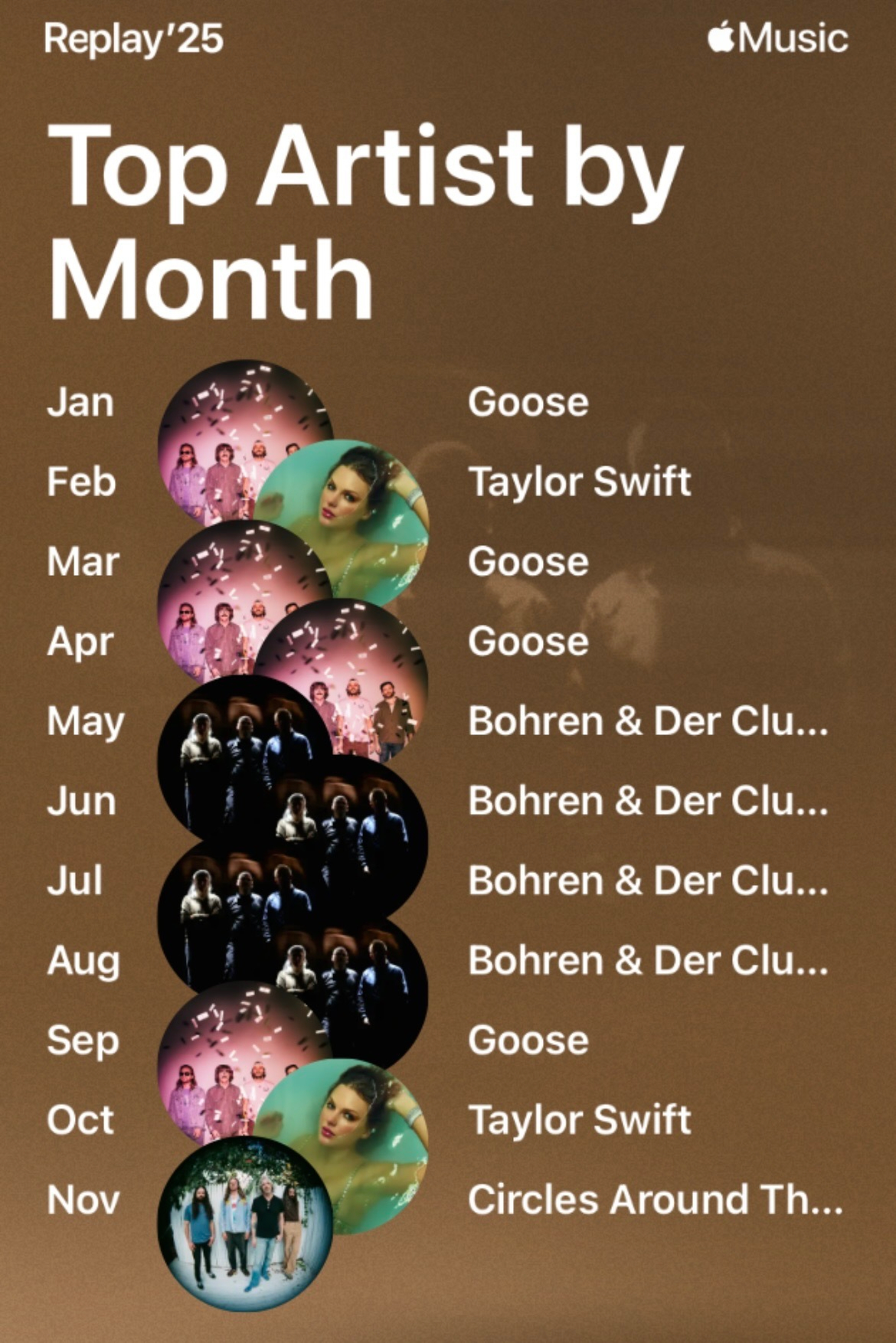
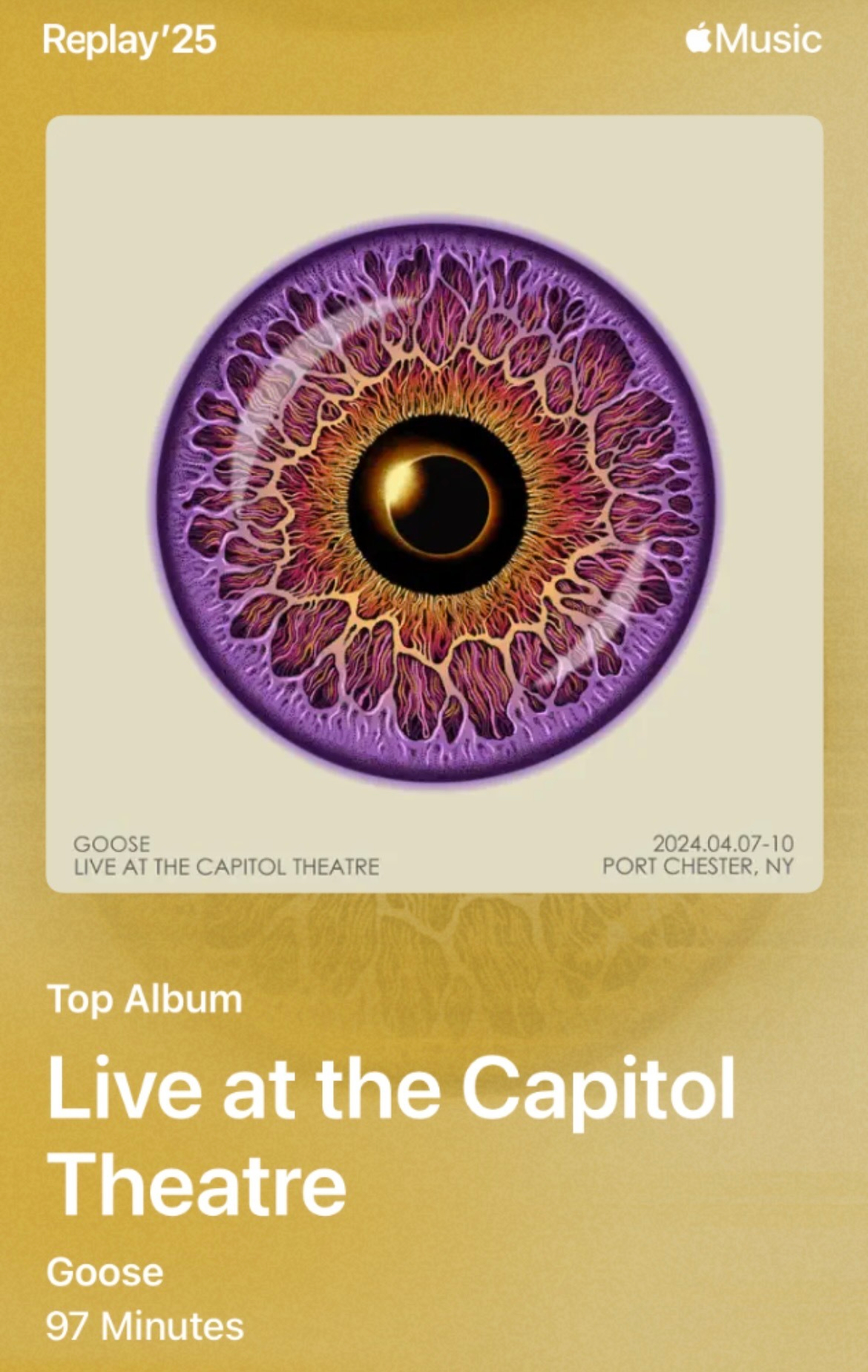
The most played artist for me in 2025 was Bohren & Der Club of Gore. I love having them on while I am reading in the evening. I got turned on to this unique jazz outfit from my student teacher last year and have written about them before. Apparently, I was one of their 500 top streamers in the world. Despite that, and despite my daughter listening to her favorite music on an iPad where she is signed in as me, rock music was my top genre. Not surprising. Goose was the top rock band that I listened two (after being my top overall artists that previous two years). Indeed, Goose was my top artist for four months this past year and their album Live at the Capitol Theatre was my top album overall. Taylor Swift topped my streaming in both February and October, though that was mostly my daughter. That said, I’ve got to admit that I like some of her music. C’est la vie.
The way things are going I suspect Goose will regain the crown as most listened to artist in 2026. We’ll see.
This Time of Year
This time of year is always challenging. I was born and raised in California and grew used to a certain amount of sun in my life. Ever since moving north to Oregon, I have been challenged by the increasingly darker days in November and December. It is also a challenging time as a high school teacher because kids and their families are also going through it, often with the added stress of finances and holidays thrown in. In my case, the vibes are sometimes made worse because certain habits fall by the wayside as my personal discipline ebbs with the shorter days.
One positive that stems from this reality is my appreciation of the winter solstice. I love hitting the 21st of December (the usual date of the solstice) knowing that from then on, for the rest of the winter, the days will slowly get longer. It is worth celebrating. Indeed, I can see why the Christians co-opted the celebration.

As It Should Be
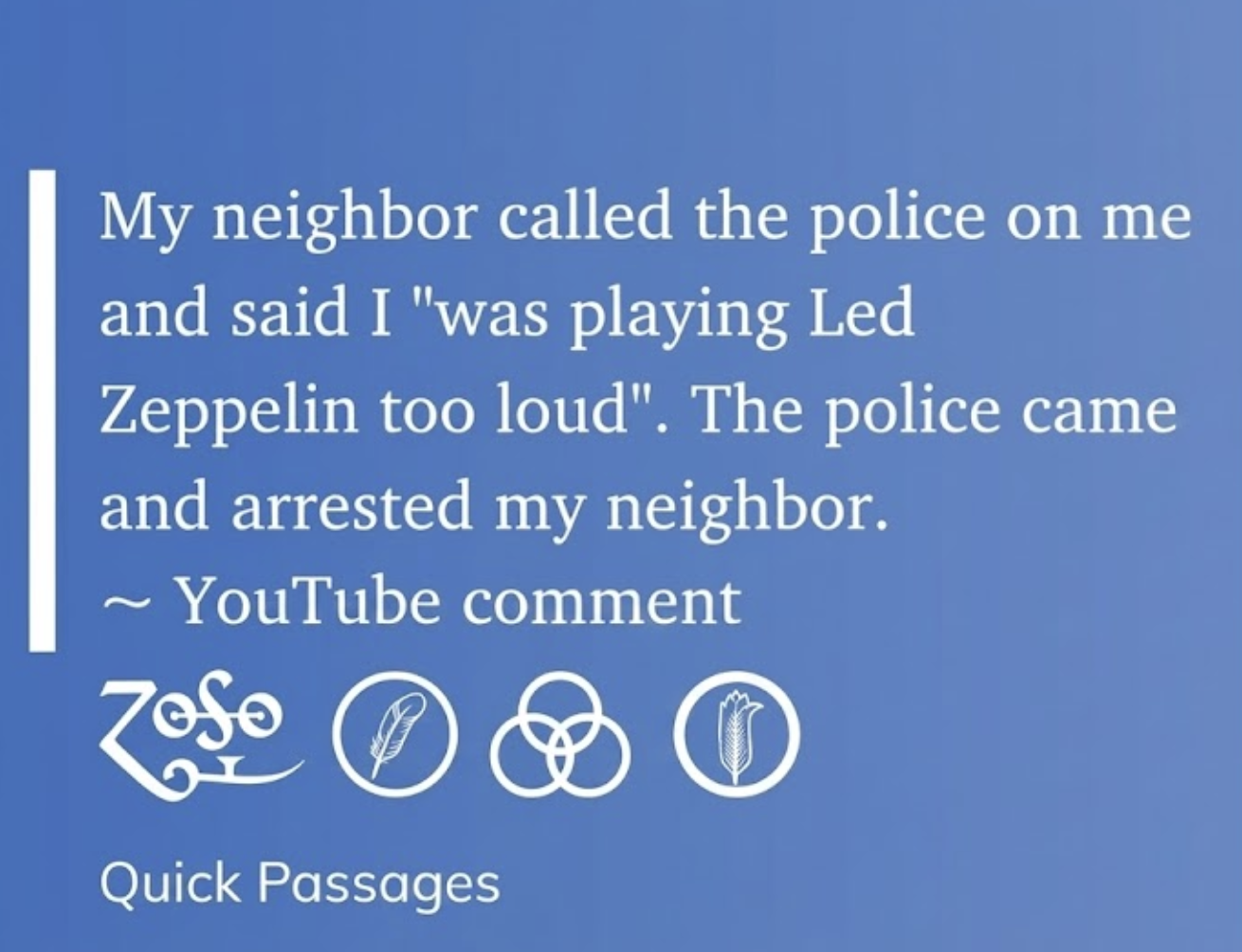
I recently came across this funny quote in the YouTube comments of a video I watched. Not much else to say.
Rush is My Jam Show #11
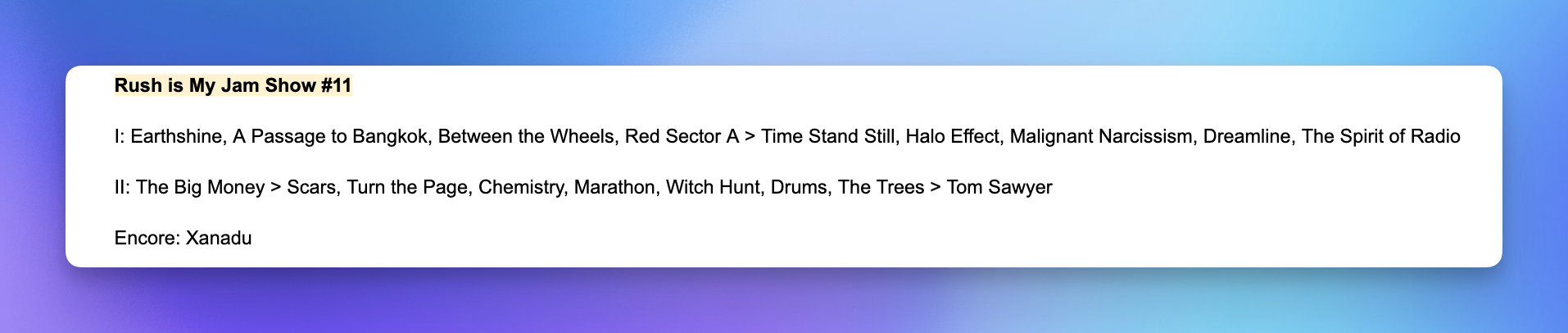
The ultimate imaginary Rush tour rambles on. Show #11 drops several of the major hits that would make most people very pleased. Tour rats who hit this show would be rewarded with the first Halo Effect of the tour. Xanadu encore would be epic, as would a Big Money set two opener. That tune always ripped my face off in real life.
Some Coming Challenges
I like to run experiments. Indeed, I’ve written about this before. I had some time on my hands last week due to the Thanksgiving holiday and I decided to run some personal experiments of varying lengths during the next four months. The first month-long experiment is going to be writing in my journal every day in December. I usually write 40% to 50% of the days during a typical month.
During the middle of December, for ten days, I’m going to try and reach out daily to a friend of family member. This will be hard, because after a full day of interfacing with teenagers, I usually want quiet time to myself. However, as I get older I realize more and more that I need to make an effort to keep relationships going strong, or going at all. As the new year begins in January, I’m going to challenge myself to increase my daily meditation time above a certain threshold that will feel like I am stretching myself a bit.
Finally, once school is back in session after the winter break I am going to challenge myself to give a ‘Bronco Gram’ to a different one of my students for ten classes in a row, complimenting them for something very specific that they are doing well in class. That means Monday through Friday, a different student each day, two weeks in a row.
The direct impetus for challenging myself in the coming months came from author and blogger Scott Young’s ‘Foundations’ concept. Basically, Young came up with a list of what considers foundational elements of a good life and is offering classes around developing those foundations. I’m not taking his classes, but I loved the idea. I tweaked his list a bit and came up with 10 of my own that I want to keep top of mind in the coming year. My experiments around journaling and meditation stem from the foundation I am calling Spirit & Reflection. The challenge around contact with friend and family grow out my foundation of Connection. Finally, my challenge to dole out some written compliments to my students is connected to my foundation of Teaching & Work. I’ll occasionally give updates on how things are going.
Help on the Way
I came across this clip from CBS Sunday Morning on Youtube. It was about Metallica’s charity organization All Within My Hands, which donates money for scholarships for young people wanting to earn ‘blue collar’ certificates. As a life-long Metallica fan, it was satisfying to watch because I am proud that this NorCal metal band that I fell in love with when I was 13 was positively impacting many, many people in America. I was also happy about what I was hearing because as a high school teacher, it is clear to me that the push to pressure all students towards college, while well-meaning, is terribly misguided.
Seeing the video recently coincided with Trey Anastastio’s charity run at the Beacon Theater in New York City. The shows marked the five year anniversary since the legendary and top-shelf gigs he put on during the fall of 2020, during the pandemic. At that time, he played in the Beacon to an empty house, actually facing away from the seats. Phans streamed the shows and the musical magic was palpable. Those shows, and the ones this past week, were vehicles for raising money for Trey’s project, the Divided Sky Residential Recovery Program in rural Vermont. Trey is in recovery so the project is near and dear to him. Phish’s Waterwheel Foundation is also out in the world (and visible at Phish shows) doing good.
Of course, one of my other favorite bands, Widespread Panic, has been raising food for local food banks for years. Their efforts actually started as a fan organized movement called Panic Fans for Food. According to their website, they have raised over $279k and 43,000 pounds of food. Pretty cool!
The Grateful Dead, the OGs, created the Rex Foundation back in 1983. Since then they have written more than $10 million worth of grants.
All these examples make me proud to be a part of these fanbases. It goes to show the power of music and the power of community.
Current Reading Stack
I finished three books this month, all of which I really enjoyed. Memoir is becoming one of my favorite genres. My current stack, as always, is heavy on the non-fiction and concentrated on history and psychology/self-help. I am slowly making progress on Blackhawk’s book, but not really enjoying it. I’m committed to finishing it, but it won’t get a high grade. On the other hand, I am really enjoying Johnson’s history of the world between 1815 and 1830. Learning a lot. The book about Hitchens will likely be finished next, so I am already having fun thinking about which book I’ll start next.


Universal Consciousness as Foundational Field?
I came across this very interesting study that attempts to help explain consciousness and bridge the gap between quantum physics, concsiousness research, and non-dual wisdom traditions. I can’t pretend to understand the math, but I understand the argument as articulated below and find it very interesting and seemingly inline with my understanding of Buddhism.
It also reminds me of Ken Wilber’s thought provoking AQAL ‘theory of everything.’ For instance, the study’s depiction of a “Pre-Big Bang” era aligns remarkably well with Wilber’s concept of Involution, where Spirit “descends” or involves itself to create the manifest world. Just as Wilber describes the formless Ground giving rise to form, the study proposes a mathematical “collapse mechanism” initiated by Universal Thought that transitions ‘undifferentiated potential’ into specific physical states. Crucially, both frameworks agree that space and time are not fundamental containers, but emergent properties that arise only after this initial descent occurs. Consequently, the study offers a potential physics-based model for Wilber’s philosophical claim that the spatial-temporal universe is a secondary creation of a deeper, non-spatial consciousness.
My personal bias has me rooting for studies like this. If core Buddhist concepts can be validated with math, that’s a win. Also, if consciousness is unified, then it is true that our feeling of separateness is indeed an illusion. It also reinforces the Buddhist conclusion that we should have compassion for all living beings, animals included, because we are literally cut from the same cloth. All in all, very interesting. I hope more related inquiries follow.

Hope
I came across this quote in the recent George Packer “By the Book' segment in the New York Times. I love this sort of thing because I love seeing into the unique details of other people’s lives. It’s the same reason I love the weekly ‘Sunday Routine’ segment they do.
Randomly, I actually had the pleasure to meet Mr. Packer when he came to my school to talk about reading and writing to several classes (including mine). I think it was 2019?!? I’ve enjoyed the three books of his that I’ve read, including The Assassins' Gate, The Unwinding, and his biography of ambassador Richard Holbrooke, Our Man.
What might I add to this excellent, succinct list? Other than swapping his progeny out for mine, not much: Packer nailed it.

Gratitude
For several years now, since before the pandemic, I have been in the habit of writing down three things each day that I am grateful for. I don’t remember where I got the idea from, but it is a fairly common suggestion among those influenced by the teachings of positive psychology. I keep my list in a running Google Doc. Honestly, I don’t know if I’m happier as a result of the practice, though I do enjoy doing it every day. I’m looking forward to using Google Gemini to help analyze my list, but that’s a topic for a different post.
Considering it is Thanksgiving, I wanted to share three things I am grateful for here.
- My incredible good fortune to have been born where and when I was born, with a healthy mind and body.
- My beautiful, quirky, compassionate wife and amazing daughter, who is infinitely more amazing than I thought a daughter could be.
- My senses and mental faculties through which I am able to wonder, experience awe and the full range of human emotions.

Using Notebook LM in Class
I have been experimenting as a teacher with Notebook LM. One of the cool things we can do is create our own ‘notebook’ with our own hand selected resources, and then share them with our students. Student can then use the ‘notebook’ to study. For instance, they can have the tool quiz them based on the content in the ‘notebook.’ They can also make a concept web and then click around to review details. Another cool feature, which has been out for a while now, is being able to make a podcast that reviews all the content in the ‘notebook’.
My APUSH students will be taking an exam soon on the period 1800 through 1848. I compiled a ‘notebook’ that included hand-selected YouTube videos, websites, and even my own lecture notes. It took the software about 2 minutes to make a 14 minute podcast conversation reviewing all the content in the ‘notebook.’ Pretty damn cool! The podcast is here if you want to check it out.
My same students are also having a seminar on an essay about Nat Turner’s rebellion in 1831. Because I have a pdf of the essay, I was able to turn that into a podcast, as well. My plan is to share that with the kids after their seminar, as I don’t want to discourage them from doing the reading.
A new feature that hasn’t quite rolled out to schools yet is infographics. All together, this is an amazing new tool for high school students, and for lifelong learners.

On Christopher Hitchens
I am reading an interesting book about one of my intellectual heroes, the late Christopher Hitchens. The book’s author, coming from the political left, argues that Hitchens got a lot right, but erred seriously in his support for both the “War on Terrorism” and the Iraq War during the first decade of the 21st century. Hitchens began his intellectual journey as a socialist and by 2004 was oddly all in on Bush’s foreign policy in the Middle East. The author also critically deconstructs some of the arguments Hitchens' made in debates about religion.
A couple points come to mind as I reflect on Hitchens and his thinking. For one, his mistakes make him more—not less—useful to thinkers today. The book emphasizes that studying where Hitchens went wrong sharpens our own judgment. Heroes aren’t templates; they’re case studies. His intellectual courage, eloquence, and range remain valuable, but so do the cautionary lessons that grew from his rhetorical confidence and general arrogance. Additionally, I am reminded that admiration doesn’t require full agreement about everything—especially with complicated figures like Hitch. Indeed, there is no one I likely agree with on everything. In my mind, Hitchens' error about Iraq does not tarnish his overall body of intellectual work. For instance, I love his book god Is Not Great, but thought his attacks on Buddhism to be feeble and a wasted effort.
But none of this diminishes Hitchens' importance. If anything, it makes him more useful. Hitchens shows us that admiration doesn’t always require absolute agreement and that inspiration doesn’t require perfection. For me, he remains a case study in how a thinker can be both brilliantly right and consequentially wrong—and still worth reading, wrestling with, and learning from.


Nano Banana Pro Revisited
Yesterday I wrote about my disappointment with the latest version of Google’s image generator, Nano Banana Pro. I decided to ask Gemini what I was missing and lo and behold, it explained to me what I was doing wrong. I also realized that the best way to make infographics, which I’ll want to do for my students, is to use Notebook LM, not Nano Banana.
Here are a couple of pics I created for my next lessons in AP Gov and APUSH. We are looking at the New Deal and Great Society in AP Gov and Nat Turner’s Rebellion in APUSH.
Pretty cool.


Playing Around with Nano Banana Pro
I am interested in the latest tech and decided today to play around with Google’s new Nano Banana Pro, which is the top of the shelf (for now) AI image generator. Since it landed a few days ago, there are a lot of YouTubers showing off the potential use cases.
The first image I worked on was a simple, but custom infographic comparing the New Deal and the Great Society for my AP Gov class. Students are working in pairs to conduct the initial reasearch, but I wanted a visual for our review. I’m pleased with the results, but not blown away.
I then decided to see if I could get a picture of FDR and LBJ in the front of my classroom so I could include it on our next daily agenda. I uploaded a photo of the front of my room. Unfortunately, it couldn’t handle my request. For one, it couldn’t use the photo I uploaded. Instead the image it created used a made up, generic classroom. Secondly, it wouldn’t make images of FDR or LBJ since they are ‘public figures.’ Disappointing, but understandable.
Finally, I asked Nano Banana Pro to make a timeline infographic of 10 major uprisings in American History (we are about to have a Socratic seminar on an essay about Nat Turner). It did an alright job, but included two of the events twice. I asked it again to remake the infographic without the duplications and it duplicated _all _the events. Very disappointing. It makes me wonder how much the YouTube influencers are getting paid by Google to promote a product that isn’t quite as good as advertised. Even if they aren’t paying them, surely they are boosting the algorithm (since they own both YouTube and Nano Banana). Needless to say, I don’t imagine using this tool much in the near future.


Paying the Man
Today was one of those days when you’ve just got to pay the man. The tire light came on in one of our cars so we took it in to Les Schwab, a Northwest icon of a company, to see what was up. We ended up having to buy two new tires for almost $500. I was curious about the cost and did a little poking around.
Tire mark ups are apparently about 35%. Seems like a very healthy margin. I also learned that Les Schwab is worth approximately $7 billion. It is also no longer owned by founder and namesake Les Schwab. He sold the company in 2020. The current owners are the Meritage Group. Who owns the Meritage Group? Well, they appear to be owned by a guy named ‘Nat’ Simons, who inherited his wealth. His father Jim Simons had a net worth of approximately $31.4 billion at the time of his death in May 2024. Hmmmmmm….
I love that our need for tires helps support others who live in our community. However, considering the margins for tires and especially because of who now owns Les Schwab, I feel less good about the expenditure. Furthermore, I feel like this transaction is very indicative of our current economic reality in the United States. Specifically, you’ve got a company that appears to be local, but is actually owned by a mix of private and public equity. The real owner inherited the privilege of owning the company and has so much money (none of which he earned) he can’t even comprehend what an unexpected $500 bill feels like to a middle class family.
Organic Purple Yams FTW
The latest habit I’ve adopted is a bit of a weird one. For the past few weeks, I’ve eaten one organic purple sweet potato just about every day. I heard a doctor mention it on a podcast and it was the one ‘superfood’ I haven’t heard much about. I figured I’d give it a shot. Now, I don’t really cook. I’m not very good at it and I don’t enjoy spending time doing it. However, cooking up a purple yam is pretty simple. Poke some holes in it with a knife or fork, throw ‘em into the toaster oven at 400 (I usually cook 3 or 4 at time) and 40 minutes later you’re ready to eat. I keep it simple and add two tablespoons of organic extra virgin olive oil and a little salt and I’m good to go. I mash it up and chow down. I’ve been extremely satisfied and don’t anticipate stopping this new diet habit. I’m already seeing a bit of a reduction in weight, which I chalk up to the fact that the potato fills me up (I’ve usually just had my daily smoothie) and I don’t eat anything else with it. For someone who wants to eat and doesn’t like cooking, this has been a nice win.
The main health benefits from eating purpple sweet potatoes comes from the anthocyanins, which are what make the potato purple. They are also found in cabbage and blueberries and are powerful antioxidants. Purple sweet potatoes are also apparently loaded with fiber, vitamins (especially A and C), potassium, and manganese. Finally, they’re not that expensive.
#winning

Odd and Unpredictable
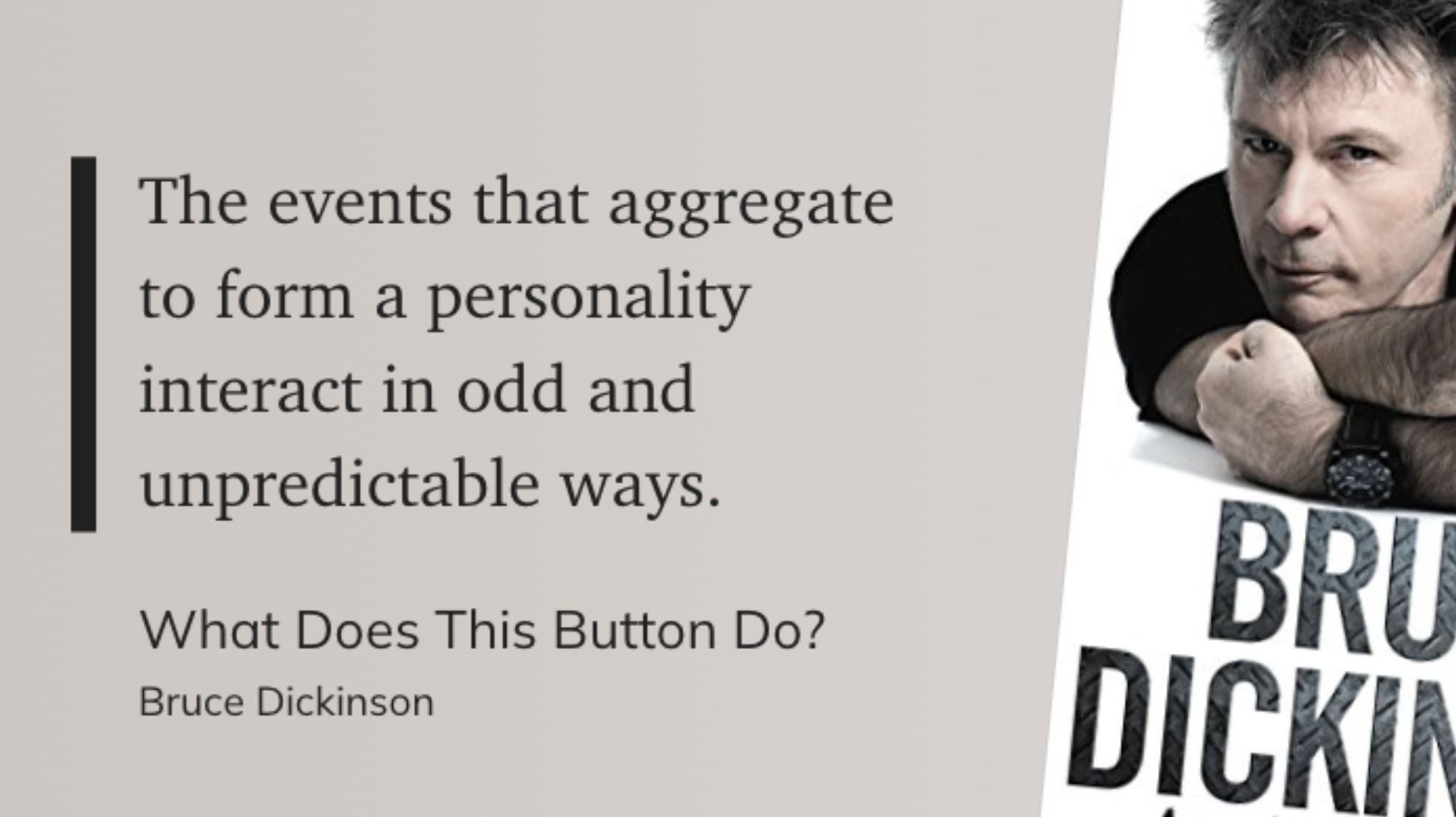
Bruce Dickinson is one of the most fascinating people in the world. He is most famous for being the long time lead singer of Iron Maiden, one of the best heavy metal bands of all time. However, in addition to that, Dickinson is also an author and a pilot, eventually flying the band around the world on their tours on their plane, Ed Force One. He is also a world-class fencer! His wide-ranging intellectual interests can be seen in the songs he has written over years. For instance, Alexander the Great is a great history lesson and Rime of the Ancient Mariner a great homage to Coleridge’s epic poem of the same name. Hell, I was first introduced to the novel Dune because of Maiden’s tune To Tame A Land.
The quote below is from his memoir What Does This Button Do? I saved it because I thought it was a great sounding sentence. I also saved it because I manages to convey a complex reality, very neatly.